.svg)
What Is a BS3621 Lock? A Plain Guide to British Standard Locks
A BS3621 lock is a lock that meets British Standard 3621, the UK standard for thief-resistant lock assemblies that need a key to open from both sides. You will usually find it on 5-lever mortice deadlocks and some nightlatches on timber doors, with "BS3621" and the BSI Kitemark stamped on the faceplate. Many home insurers ask for it on final exit doors.
Key takeaways
- BS3621 covers locks that are key operated from both sides (key egress).
- BS8621 is the keyless egress version (thumbturn inside). BS10621 is dual mode.
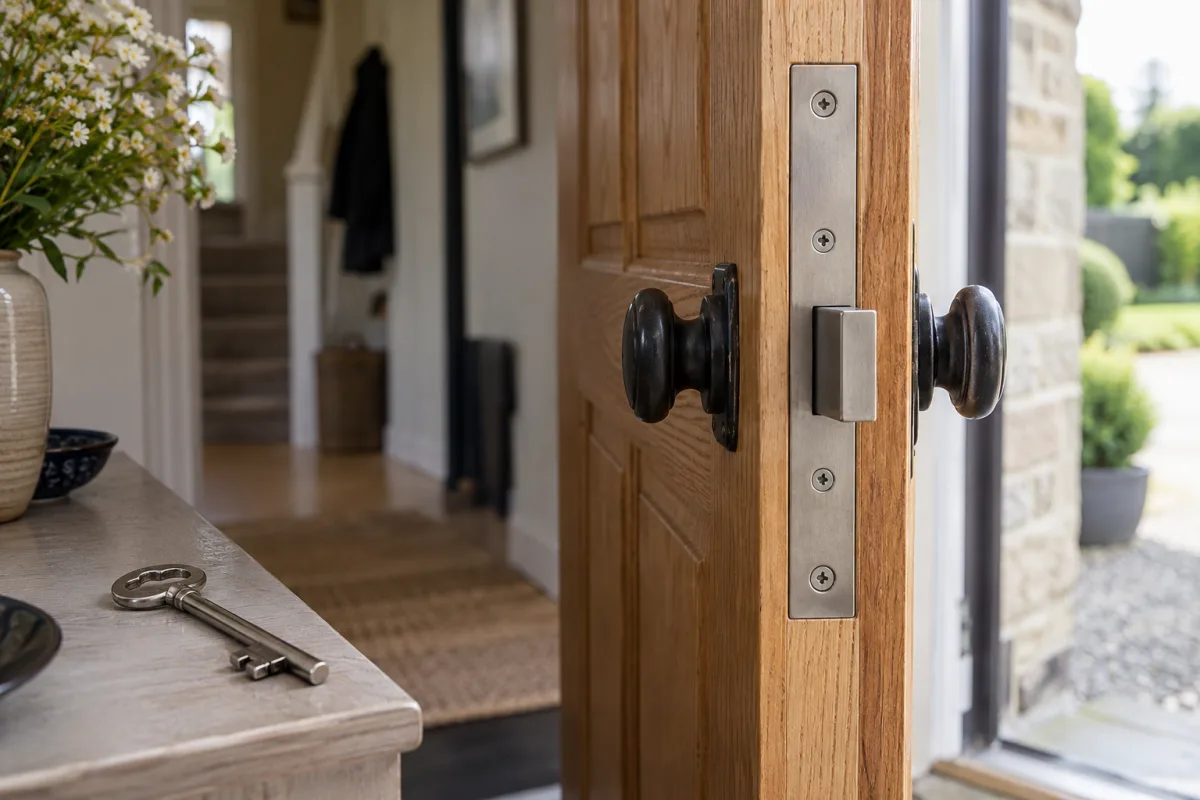
- Look for the Kitemark and "BS3621" stamped on the lock faceplate, the metal edge visible when the door is open.
- Euro cylinders on uPVC and composite doors are not BS3621. For those, look for TS007 3-star (or a 1-star cylinder with 2-star handles) or Sold Secure Diamond (SS312).
- PAS 24 applies to complete doorsets, not individual locks.
- Always check your own insurance policy wording, because requirements vary.
What does BS3621 actually mean?
BS3621 is a British Standard published by BSI that sets out how a lock assembly must resist attack. A lock that meets it has been tested against common methods of forced and non-forced entry, such as drilling, picking, sawing and forcing the bolt back. The standard also covers practical points like the number of different key combinations available, so that your key is unlikely to open a neighbour's lock.
The defining feature of BS3621 is key egress. The lock needs a key to lock and unlock it from the outside and from the inside. That makes it harder for a burglar who gets in through a window to leave through the door with your belongings, which is one reason insurers like it.
The standard has been revised several times over the years, so you may see a year after the number, for example BS3621:2007 or BS3621:2017. An older version is not automatically unsafe, but a very old or worn lock may be worth replacing anyway.
BS3621, BS8621 and BS10621: the three siblings
There are three closely related standards. They share the same level of resistance to attack. The difference is how the lock is opened from inside.
| Standard | How it opens from inside | Typical use |
|---|---|---|
| BS3621 | Key needed on both sides (key egress) | Front and back doors of houses where insurers ask for key locking |
| BS8621 | Thumbturn or handle, no key needed (keyless egress) | Flats, HMOs and doors that form an escape route |
| BS10621 | Dual mode: thumbturn when occupied, can be switched to key only from outside | Properties sometimes left empty, where the owner wants both options |
BS8621 exists because a key-only lock can be a problem in a fire. If the key is not in reach, getting out takes longer. Where a door is the main escape route, especially in flats and shared housing, keyless egress is often the safer choice.
With a BS10621 lock, the secure mode disables the inside thumbturn and should only be used when nobody is inside. Take advice before fitting one to a door that is the only way out of a property.
How to tell if your lock is BS3621
You can check in under a minute.
- Open the door and look at the faceplate. This is the metal strip on the edge of the door where the bolt comes out.
- Look for the Kitemark. A genuine BS3621 lock has the BSI Kitemark (a heart-shaped symbol) stamped on it.
- Look for the standard number. "BS3621" should be stamped alongside the Kitemark, often with a year.
- Check the lock type. Most BS3621 locks are 5-lever mortice deadlocks or sashlocks, set into the door, or high-security nightlatches with a deadlocking function.
Be careful with wording on packaging. A lock described as "5-lever" is not automatically BS3621, and phrases like "British Standard style" or "meets insurance standard" mean nothing without the Kitemark and the BS3621 marking on the lock itself. If the faceplate is painted over or worn, a locksmith can usually identify the lock for you.
Why do insurers ask for BS3621 locks?
Many home insurance policies require that final exit doors (the doors you lock last when leaving the house) are fitted with a lock that meets BS3621 or an equivalent standard. Some policies apply this to all external doors, and some have separate wording for uPVC and composite doors.
The reason is simple: a tested lock is harder to defeat, which lowers the insurer's risk. The consequence for you is that if you claim for a burglary and the locks do not meet the policy's requirements, the insurer may reduce or refuse the claim.
Because policies differ, read your own policy wording, often in a section called "security conditions" or "minimum security requirements". If anything is unclear, ask your insurer to confirm in writing which standards they accept for each type of door you have.
What about uPVC and composite doors?
This is where most confusion comes from. BS3621 is designed for mortice locks and nightlatches. Most uPVC and composite doors use a multipoint locking system operated by a euro cylinder, and a euro cylinder is not a BS3621 lock. Asking for a "BS3621 euro cylinder" does not make sense.
For these doors, the cylinder is usually the weak point. Look for the following instead.
TS007 star ratings
TS007 is a Kitemark scheme for cylinders and door hardware. The aim is to reach a total of three stars on the door:
- A TS007 3-star cylinder on its own, which has been tested against snapping and other attacks, or
- A TS007 1-star cylinder combined with 2-star security handles or an escutcheon that protects the cylinder.
Sold Secure Diamond (SS312)
Sold Secure is an independent testing house. Its SS312 Diamond grade for euro cylinders is widely regarded as one of the toughest tests in the UK, including snapping and manipulation attacks. Many high-security cylinders carry both TS007 3-star and SS312 Diamond.
PAS 24 for complete doors
PAS 24 is a BSI standard for the enhanced security of complete doorsets and windows. It tests the whole door, frame, glazing and hardware together, not just the lock. In England, new homes must meet Approved Document Q of the Building Regulations, and PAS 24 is one of the ways to show doors comply. If you are buying a new front door, ask whether the doorset is certified to PAS 24.
Anti-snap locks explained
Lock snapping is a technique burglars use on euro cylinders. They apply force to the part of the cylinder that sticks out from the door, which can break it at its weakest point, the narrow section where the fixing screw passes through. Once it snaps, the lock mechanism can be operated by hand.
An anti-snap cylinder is designed to deal with this. Typically it has a sacrificial front section that breaks off in a controlled way while the rest of the cylinder, and the lock, stays secure. Good anti-snap cylinders also resist picking, bumping and drilling.
Two practical points make a difference:
- Fit the right size. The cylinder should sit almost flush with the handle. One that sticks out several millimetres gives an attacker more to grip.
- Look for the markings. "Anti-snap" on its own is a marketing term. TS007 3-star or SS312 Diamond markings on the cylinder show it has been independently tested.
If your door has a cylinder that sticks out, or you do not know what is fitted, our uPVC door and lock repair service can check and upgrade it.
Which doors need what?
| Door type | What to look for |
|---|---|
| Timber front or back door (house) | 5-lever mortice deadlock to BS3621, often alongside a nightlatch |
| uPVC or composite door | Euro cylinder rated TS007 3-star, or 1-star cylinder plus 2-star handles, or SS312 Diamond |
| New replacement doorset | Doorset certified to PAS 24 |
| Flat entrance door in a block | Often BS8621 keyless egress, subject to fire safety requirements |
| Property sometimes left empty | BS10621 dual mode may suit, with advice on escape routes |
Timber front doors
The classic setup for a timber front door is a BS3621 mortice deadlock plus a nightlatch. The nightlatch is convenient for day-to-day use; the deadlock is what you lock when you leave and what your insurer is likely to ask about.
uPVC and composite doors
Make sure the multipoint lock engages fully when you lift the handle, and upgrade the cylinder to a TS007 3-star or SS312 Diamond model. If the handle is stiff or the lock does not engage cleanly, have the mechanism checked before it fails.
Flat entrance doors
Flat entrance doors in purpose-built blocks are often fire doors, and they may be part of the building's fire strategy. Changing hardware can affect that. Before changing a lock, check with your freeholder, managing agent or landlord, and make sure any new lock suits the fire door and gives easy escape. In many cases that means a BS8621 lock or a thumbturn cylinder on the inside.
What does upgrading cost?
At Locksmith24, replacing a lock with a BS3621 deadlock or a high-security euro cylinder typically costs £120 to £200 including parts and labour. Most locksmith jobs fall in the £89 to £300 range depending on the door and the work involved. You get a firm price before any work starts, there is no separate call-out fee, and out-of-hours call-outs may carry an extra charge, which we confirm in advance. All parts and labour come with a 180-day guarantee.
You can see more on our locksmith prices page, or read about our wider locksmith services if you want a full security check on every external door.
A note on fitting
A good lock badly fitted will not perform as tested. A mortice lock needs a solid door and a matching strike plate fixed into sound timber. A cylinder needs to be the correct length. If you are not confident, it is worth having a locksmith fit and check the lock, especially if the reason you are upgrading is an insurance requirement.
Want your locks checked?
If you are not sure whether your locks meet your insurer's requirements, call Locksmith24. A DBS-checked engineer can identify what is fitted, explain what your doors need, and upgrade to BS3621 or TS007 3-star locks for a firm price agreed before work starts.
