.svg)
Lost House Keys? What to Do Next (and When to Change Locks)
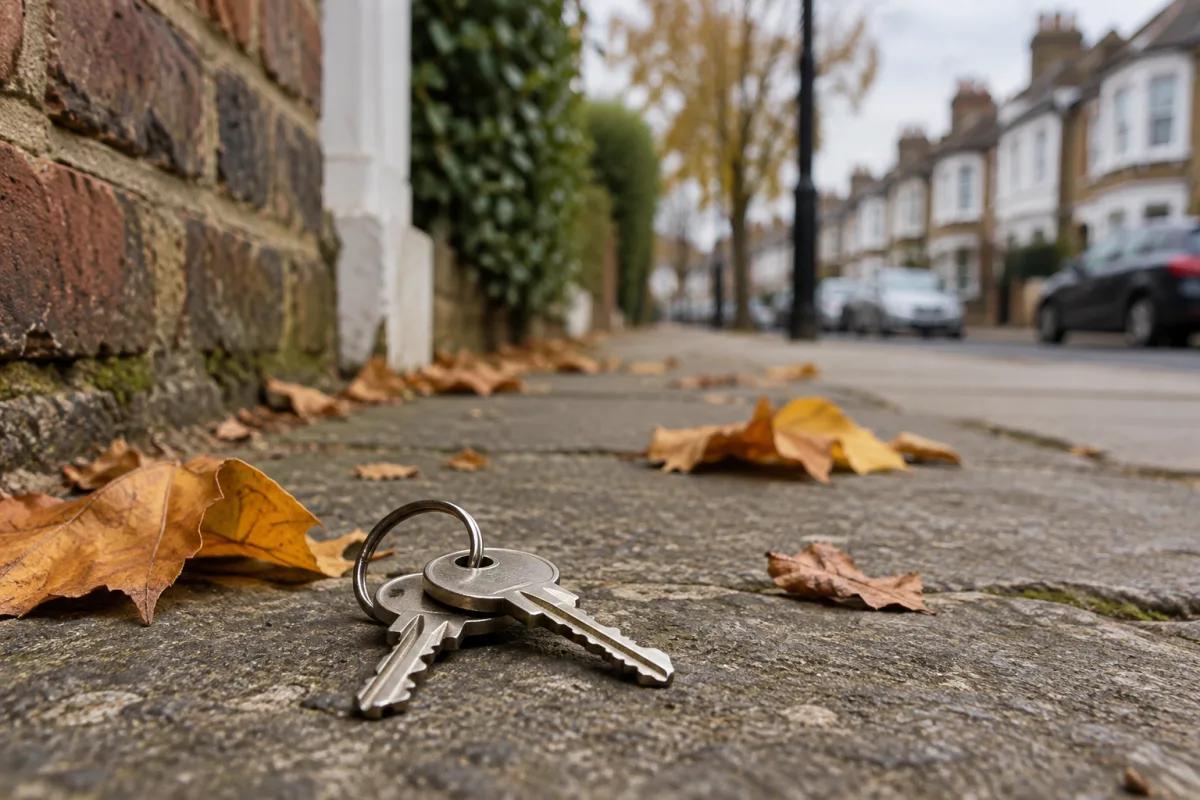
If you have lost your house keys, first retrace your steps and contact the places you visited. Then ask one question: could whoever finds them know where you live? If the keys were stolen, or kept with anything showing your address, change the locks or cylinders straight away. If they were simply dropped somewhere anonymous, a cylinder swap is often enough for peace of mind.
Key takeaways
- Retrace, ring round and report first. Many lost keys turn up within a day.
- Risk depends on what was with the keys. An address, ID or a stolen bag means you should change the locks now.
- On uPVC and composite doors, replacing the euro cylinder is usually all that is needed. Mortice deadlocks may need a new lock.
- Read your home insurance policy. Many include some form of key or lock cover, and many expect secure locks to be in place.
- Renters should tell their landlord or letting agent before changing anything.
- A locksmith can get you back in without damage in most cases, then make the property secure on the same visit.
Step 1: Retrace your steps and report the loss
Before you assume the worst, give yourself a short, focused search. Most lost keys are not stolen; they are sitting in a coat pocket, a car footwell or behind the counter of the last café you visited.
- Check the obvious places twice. Bags, jacket pockets, the car, your desk at work and the inside of the front door (keys left in the lock are more common than people admit).
- Ring the places you visited. Shops, gyms, pubs, your workplace reception. Leave your name and a description of the key ring.
- Check public transport lost property. If you travelled by Tube, bus or train in London, TfL and the rail operators run lost property services that you can contact online.
- Report a theft to the police. If your bag or keys were taken, report it and ask for a crime reference number. Your insurer may ask for it later. For keys that were simply mislaid, you do not normally need to involve the police.
Set yourself a sensible limit. If you cannot get into your home, or you are worried someone else can, waiting a day for the keys to turn up is not a plan. That is the point to call an emergency locksmith.
Step 2: Assess the risk honestly
Whether you should change your locks after losing keys comes down to one thing: how easily could a stranger connect those keys to your door? Work through these questions.
Were the keys with anything that identifies your address?
A key ring with a name and address tag, a wallet with your driving licence, post in the same bag or a phone that is not locked all make it easy to find your home. In any of these cases, treat the keys as compromised and change the locks the same day.
Were they stolen or dropped?
A stolen handbag is a higher risk than keys dropped in a park. A thief who has your purse and your keys has both the motive and the information. Keys lost on a night out near your home also deserve more caution than keys lost on holiday.
Who else might have access?
If you lost a spare that was kept somewhere shared (a communal hallway, a work drawer, with a former partner or tenant), the same logic applies. You do not know who has seen or copied it.
Lower risk situations
If the keys were loose, with nothing identifying, and lost far from home, the practical risk is lower. Many people still choose a cylinder change for peace of mind, and on most modern doors it is a quick job.
Should I change locks after losing keys?
Here is a straightforward way to decide.
- Change them now if the keys were stolen, were with your address or ID, or you have reason to think someone knows where they came from.
- Change them soon if you cannot account for where the keys went, or they were lost locally.
- Consider it optional if the keys were lost far from home with nothing identifying, and you feel comfortable.
"Changing the locks" does not always mean replacing the whole lock. What you need depends on the type of lock on your door.
| Door and lock type | What usually needs changing |
|---|---|
| uPVC or composite door with a multipoint lock | The euro cylinder only. The keys operate the cylinder, not the multipoint mechanism, so a new cylinder makes the old keys useless. |
| Timber door with a nightlatch (Yale-style) | Usually the rim cylinder. The whole nightlatch may be replaced if it is old or worn. |
| Timber door with a mortice deadlock | Often the whole lock body, ideally to a BS3621 standard. Some lever locks can be re-keyed instead. |
| Back door, French doors or patio doors | Check which keys were on the lost bunch. Often another euro cylinder swap. |
A cylinder swap is also a good moment to upgrade. If your current cylinder is an old, unbranded one, an anti-snap cylinder rated TS007 3-star or Sold Secure Diamond is a sensible improvement for front and back doors. Our uPVC door repair service covers cylinders, gearboxes and multipoint locks if anything else on the door is struggling.
Home insurance and lost keys
Insurance is worth a phone call or a look at your documents before you pay for anything. Policies differ widely, so treat this as a checklist rather than a promise of what your insurer will do.
- Look for key or lock cover. Many home insurance policies include some cover for replacing locks after keys are lost or stolen, sometimes as standard and sometimes as an add-on. There may be a limit or an excess.
- Check the security conditions. Many policies require external doors to have locks of a certain standard, often BS3621 for mortice deadlocks on timber doors. If you are replacing locks anyway, fitting compliant ones keeps you on the right side of your policy.
- Keep the paperwork. Ask your locksmith for an itemised invoice showing what was fitted. Keep any crime reference number if the keys were stolen.
- Tell your insurer if required. Some policies ask you to report lost or stolen keys. If you do not change compromised locks and there is a break-in using those keys, a claim may be harder.
If you rent: tell your landlord or letting agent
Tenants should not change the locks without speaking to the landlord or agent first, unless it is a genuine emergency where you need to secure the property. Your tenancy agreement normally covers keys and locks, and many agreements say the tenant pays if keys are lost.
- Contact your landlord or agent as soon as you know the keys are gone.
- Ask whether they want to arrange the locksmith or are happy for you to do so.
- If you change a cylinder in an emergency, give the landlord a copy of the new keys promptly.
- In shared houses and flats, remember that a communal door key may also be on your bunch. Building management may need to know.
Landlords can also use the opportunity to bring locks up to the standard their own insurer or licensing scheme asks for.
Lost car keys and fobs
Car keys are a different job. Modern keys contain a transponder chip and often a remote fob that must be programmed to the car. Options are usually your vehicle dealer or a specialist auto locksmith. Have your V5C logbook and ID ready, because anyone reputable will need proof that the car is yours. If the car keys were on the same bunch as your house keys, deal with the house first, because your home is the bigger risk.
Lost office keys and commercial premises
Lost office keys need a slightly different approach because more people are affected and the security risk can be greater.
Act quickly and record it
Report the loss to whoever manages the building or your facilities team straight away. Businesses should keep a key register showing who holds which keys, so it is clear which doors are exposed.
Master key systems
Many offices use a master key system, where individual keys open their own doors and a master key opens all or most of them. What happens next depends on which key was lost:
- An individual key: usually only the cylinder for that door needs changing or re-pinning.
- A sub-master or master key: every door it opens is now at risk. Cylinders may need re-pinning or replacing across the system.
Restricted key systems, where copies can only be cut with authorisation, make losses easier to manage. If your business does not have one, a lost key is a good prompt to look at it. See our commercial locksmith services for office and shop work.
How to prevent being locked out again
You cannot stop keys going missing completely, but you can make it far less stressful.
- Leave a spare with someone you trust. A neighbour, family member or close friend nearby is still the simplest and safest backup.
- Never put your address on your keys. If you want a return tag, use a phone number or a key return service that does not reveal your address.
- Do not hide keys outside. Under the doormat, in a plant pot or above the door frame are the first places a burglar looks.
- Keep a record of your key and lock types. A photo of your cylinder and a note of the make helps a locksmith quote accurately.
Key safes: pros and cons
Key safes are useful, especially for carers, family members or tradespeople who need access. They also have downsides.
- Pros: access without handing out copies, codes can be changed, and they avoid a lockout when no one is available with a spare.
- Cons: a visible key safe tells passers-by a key is stored there, cheaper models can be forced, and codes get shared more widely than you intend.
If you use one, choose a model with independent security accreditation, fix it securely into masonry out of direct view from the street, and change the code regularly. Some insurers have conditions about key safes, so check your policy.
What a locksmith does on a lost keys call
When you ring Locksmith24 about lost keys, here is what normally happens.
- We ask a few questions. Where you are, the type of door and lock, and whether the keys were lost or stolen. This lets us give you a firm price before any work starts.
- An engineer is on the way. Our typical arrival time across London is 20 to 30 minutes, 24 hours a day, and every engineer is DBS checked.
- We get you in. Non-destructive entry is always the first choice. Most doors can be opened without damage, and lockout openings start from £89.
- We secure the property. If the keys might be in the wrong hands, we replace the euro cylinder or fit a new lock, such as a BS3621 deadlock or a high-security euro cylinder. Lock replacement typically costs £120 to £200 including parts and labour.
- You get new keys and a guarantee. All parts and labour come with a 180-day guarantee.
There is no separate call-out fee, though out-of-hours call-outs may carry an extra charge, which we tell you about before we set off. You can see typical costs on our locksmith prices page, and more on the service itself on our lost keys locksmith page.
Lost your keys right now?
If you are locked out, or worried that someone else has your keys, call Locksmith24. We will talk you through the options, give you a firm price, and send a DBS-checked engineer to get you back in and make your home secure, day or night.
